Whispers of Stone and Sky: The Hidden Landmarks of Scotland’s Highlands
Have you ever stood before a stone tower older than memory, feeling like it was waiting just for you? In the Scottish Highlands, ancient landmarks rise from misty glens not with fanfare, but quiet dignity. These aren’t just ruins—they’re echoes of clans, kings, and centuries etched in rock. Far from the polished pathways of popular tourist sites, tucked behind veils of heather and mist, lie places where time slows and history speaks in whispers. I’ll take you beyond the tourist trails to places where history breathes and landscapes steal your breath.
The Allure of Hidden History
The Scottish Highlands have long held a magnetic pull for those seeking more than scenic vistas. Their rugged terrain—rolling moors, deep lochs, and jagged peaks—has not only shaped the land but also preserved its past. Isolation, often seen as a barrier, has become a guardian of heritage. While modern life surges forward, the Highlands cradle remnants of a world shaped by stone, fire, and loyalty. It is here, in the quiet corners untouched by mass tourism, that one can truly feel the weight of time.
Today’s travelers are increasingly drawn to authenticity. Rather than queuing for ticketed castles or posing beside crowded monuments, many seek personal, intimate encounters with history. Hidden landmarks offer that rare gift: a moment of solitude where the past feels immediate. There is a difference between seeing a place and feeling it. The remote brochs, abandoned strongholds, and forgotten chapels of the Highlands do not shout their significance—they invite reflection. And in that stillness, a deeper connection forms.
Geography plays a crucial role in this preservation. The Highlands’ challenging landscape has naturally limited large-scale development. Roads wind sparingly through glens, and many sites remain accessible only by foot or small ferry. This inaccessibility has shielded them from over-commercialization. Places like the remote western isles or the northern reaches of Sutherland have retained their quiet character, their stories passed down through generations rather than packaged for souvenirs. The land itself has become an archive, with each cairn, standing stone, and ruin serving as a chapter in an unwritten book.
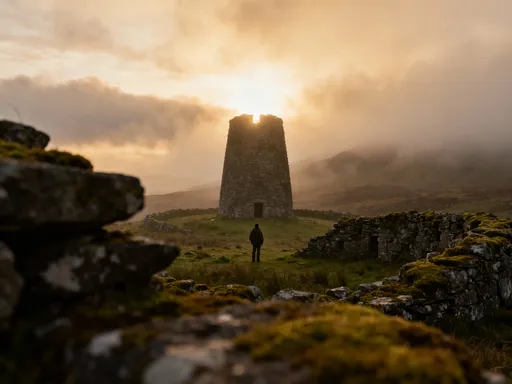
Examples abound. Scattered across the Outer Hebrides and northern mainland are brochs—Iron Age towers built without mortar, standing defiant against centuries of wind and rain. Some, like Dun Carloway on the Isle of Lewis, perch on rocky outcrops, their thick stone walls still rising over ten meters. These structures were once homes, watchtowers, and symbols of power. Today, they are silent, yet their presence speaks volumes. They are not recreated or restored for visitors; they are as time left them—weathered, resilient, and real.
Unlocking the Past: What Makes a Highland Landmark “Secret”?
When we speak of “hidden” landmarks in the Scottish Highlands, we do not mean places erased from maps or cloaked in myth. Rather, these are sites that exist outside the mainstream narrative of Scottish tourism. They lack billboards, gift shops, and guided tour groups. They are not featured in every travel brochure, nor do they trend on social media. Their secrecy lies not in obscurity, but in accessibility—both physical and informational. A hidden landmark is one you must seek, not stumble upon.
Several factors contribute to a site’s hidden status. First is location. Many of these places lie beyond paved roads, requiring a hike across moorland or a boat ride to a distant shore. Others are situated on private land, visible only with permission or through designated access routes. The Scottish Outdoor Access Code supports responsible exploration, but it also means visitors must be informed, respectful, and prepared. Without clear signage or visitor centers, discovery becomes an act of intention.
Another factor is the absence of commercial infrastructure. Unlike Edinburgh Castle or Urquhart on Loch Ness, hidden sites rarely have ticket booths, cafes, or audio guides. There are no souvenir stalls selling tartan keychains. This lack of development is not a drawback—it is a preservation of integrity. It allows the site to remain as it has been for centuries: quiet, unaltered, and unmediated. The experience is not curated; it is earned.
Equally important is the role of oral tradition. In many Highland communities, the stories of ancient sites are kept alive through local knowledge. An elder might point to a mound in the distance and say, “That’s where the old chapel stood,” or “Our family once held land near those stones.” These narratives are not always recorded in history books, but they carry deep cultural weight. They remind us that history is not only written—it is lived, remembered, and shared. To hear these stories is to gain a key to understanding the land on a personal level.
Echoes in the Mist: Exploring Ancient Brochs and Fortified Towers
Among the most remarkable remnants of ancient Scotland are the brochs—towering drystone structures unique to the northern and western isles. Built during the Iron Age, between 500 BC and 200 AD, these cylindrical towers were engineering marvels of their time. Constructed without mortar, their double-walled design provided insulation and strength, allowing them to withstand the harshest Highland weather. Some stood over 13 meters tall, with internal staircases winding between floors, and small chambers built into the thick walls.
Dun Carloway, on the Isle of Lewis, offers a striking example. Perched on a rocky ridge, it overlooks a sweeping valley and distant sea. Its walls, still rising to over 9 meters in places, enclose a central courtyard where life once pulsed with activity. Standing inside, one can imagine the warmth of a central hearth, the scent of peat smoke, and the murmur of voices in a long-lost dialect. The wind still howls through its narrow passages, echoing as it must have for centuries, carrying with it a sense of continuity.
Another well-preserved broch is Mousa Broch in the Shetland Islands. Though geographically separate from the mainland Highlands, Shetland shares deep cultural and historical ties with the region. Mousa Broch is considered the best-preserved example in existence, its walls nearly complete and its internal structure clearly visible. Local legend holds that it was once a refuge for lovers or outlaws, a place of sanctuary hidden in the fog. Visitors who make the short boat trip from the mainland often describe an uncanny stillness upon arrival—as if stepping into a world untouched by time.
These brochs were more than homes. They were statements of power, symbols of community strength, and likely served defensive, ceremonial, and social functions. Their placement on elevated ground suggests strategic importance—overlooking sea routes, farmland, or trade paths. Archaeological evidence indicates that some were occupied for centuries, with modifications made over time. Others were abandoned and reclaimed by nature, only to be rediscovered hundreds of years later.
What makes visiting a broch so powerful is the immediacy of the experience. There are no reconstructions, no mannequins in period dress. You touch the same stones that ancient hands shaped. You stand where sentries once watched for sails on the horizon. The silence is not empty—it is full of memory. These structures do not need interpretation panels to convey their significance. Their presence alone is enough.
Clan Strongholds Lost and Found
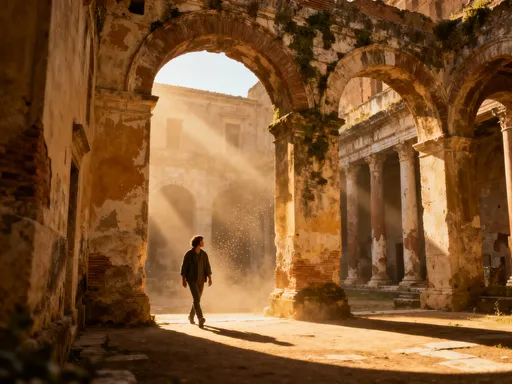
The history of the Scottish Highlands is inseparable from the story of the clans—family-based communities bound by loyalty, land, and tradition. At the heart of each clan’s identity was its stronghold, often a castle or fortified tower situated in a defensible location. These were centers of governance, defense, and daily life. Today, many of these strongholds lie in ruins, their roofs long gone, their halls open to the sky. Yet they remain powerful symbols of resilience and identity.
Unlike the grand castles maintained by heritage organizations, countless clan strongholds are free to visit, unguarded and unmonitored. Sites such as Castle Tioram in Loch Moidart or the ruins of Invergarry Castle on the shores of Loch Oich offer a sense of discovery. They are not enclosed by fences or ticket booths. Visitors arrive by boat, by foot, or by narrow rural roads, often finding themselves alone with the stones. This solitude enhances the emotional impact, allowing space for reflection and imagination.
Castle Tioram, situated on a tidal island, was once the seat of the Clan MacDonald of Clanranald. Its walls rise from a rocky outcrop accessible only at low tide, a natural defense that speaks to the strategic thinking of its builders. Though now in ruins, its layout is still discernible—great hall, chapel, and defensive towers. Standing there at sunset, with the water lapping below and the hills turning gold, one can feel the weight of its history. It was not just a fortress; it was a home, a sanctuary, a symbol of belonging.
It is important, however, to approach these sites with respect. The history of clan conflicts includes violence, displacement, and loss. While it is tempting to romanticize the era of clan battles and Highland valor, the reality was often harsh and complex. These ruins are not relics of glory alone—they are memorials to struggle, survival, and change. Responsible visitation means acknowledging that complexity, not reducing it to a simple tale of heroism.
Many of these strongholds were abandoned after the Jacobite uprisings of the 18th century, particularly following the Battle of Culloden in 1746. The British government’s subsequent suppression of Highland culture—disarming clans, banning tartan, and dismantling traditional governance—led to the decline of many clan seats. Some were deliberately slighted, their walls torn down to prevent reuse. Others simply fell into disrepair as families dispersed or emigrated. Today, their quiet presence is a testament to endurance.
Sacred Stones and Forgotten Chapels
Beyond fortifications and homes, the Highlands hold quieter, more spiritual landmarks—standing stones, stone circles, and the ruins of early chapels. These sites speak to a different kind of power: one rooted in faith, ritual, and connection to the land. Long before churches were built, the Highland landscape was marked by sacred sites, often aligned with celestial events or natural features like rivers and mountains.
Standing stones, some dating back to the Neolithic period, can still be found in remote glens and hilltops. They vary in size and shape, but many are deliberately placed, suggesting ceremonial or astronomical significance. The Clava Cairns near Inverness, though not entirely hidden, exemplify this tradition. Surrounded by a circle of standing stones and aligned with the winter solstice, they reflect a sophisticated understanding of the cosmos. Smaller, lesser-known circles exist across the Highlands, often marked only by a few moss-covered stones barely visible in the heather.
With the arrival of Christianity in the early medieval period, new sacred spaces emerged. Missionaries like St. Columba traveled to the Highlands, establishing monasteries and chapels that often incorporated existing pagan sites. This blending of traditions created a unique spiritual landscape. On the island of Iona, the abbey is well-known, but smaller satellite chapels—like those on nearby Eorsa or Fuday—remain quiet and rarely visited. Their ruins are simple: low walls, arched doorways, and sometimes a carved cross. Yet they carry a profound sense of peace.
These chapels were places of prayer, healing, and community gathering. They were often built in secluded locations, chosen for their tranquility and natural beauty. Pilgrims would travel long distances to visit them, seeking solace or spiritual renewal. Today, walking to one of these sites—through boggy moorland or along a rocky shore—can feel like a modern pilgrimage. The journey itself becomes part of the experience, a slow unfolding of landscape and spirit.
The integration of Christian and pre-Christian elements is evident in the carvings found at many sites. Celtic crosses, with their intricate knotwork and biblical scenes, often stand near older standing stones. This continuity suggests not replacement, but evolution—a merging of beliefs rather than erasure. For modern visitors, these sites offer a chance to reflect on the enduring human need for meaning, connection, and reverence.
Practical Magic: How to Discover These Sites Responsibly
Finding and visiting hidden landmarks in the Scottish Highlands requires preparation, respect, and a spirit of adventure. The first step is research. While these sites may not appear on every map, they are often documented in archaeological surveys or local history guides. Ordnance Survey maps, particularly the 1:25,000 scale, are invaluable for locating ruins, cairns, and ancient paths. Digital tools like Walkhighlands.co.uk provide detailed route descriptions and user photos, helping travelers plan safely.
Transportation is another key consideration. A rental car offers the most flexibility, especially for reaching remote areas. However, public transport—such as local buses and ferries—can also provide access to many regions, particularly the western isles and coastal towns. For island sites like Mousa Broch, booking a small boat tour in advance is essential. Once on foot, good hiking boots, weather-appropriate clothing, and a reliable map are non-negotiable. The Highland weather is unpredictable; a sunny morning can turn into a misty, rain-soaked afternoon within hours.
Equally important is adherence to the Scottish Outdoor Access Code. This legal framework grants everyone the right to access most land and inland water for recreation, provided they do so responsibly. This means staying on paths when necessary, avoiding damage to vegetation, and never disturbing archaeological sites. It also means respecting private property—many ruins lie on working farms or crofts, and access should be sought politely when signs are unclear.
Visitors should follow the principle of “leave no trace.” This includes packing out all litter, avoiding campfires near historic structures, and not removing stones or artifacts. These sites are fragile, and even small actions can accelerate erosion. Taking a photograph is welcome; taking a souvenir is not. The goal is to ensure that these places remain intact for future generations to discover.
The best time to visit is between late spring and early autumn, when daylight hours are long and weather conditions are more favorable. May through September offers the mildest temperatures and the clearest skies, though midges—small biting insects—can be a nuisance in June and July, particularly in still, humid areas. Bringing insect repellent and lightweight netting can make a significant difference in comfort.
Why These Places Matter Today
In an age of instant information and rapid travel, the hidden landmarks of the Scottish Highlands offer something rare: slowness, silence, and depth. They remind us that not all value is measured in convenience or visibility. True exploration is not about checking destinations off a list, but about cultivating presence—being fully in a place, listening to its stories, and allowing it to change you.
These sites matter because they connect us to continuity. They are physical links to people who lived, loved, and labored long before us. They challenge the modern tendency to discard the old in favor of the new. In their weathered stones, we see resilience. In their quiet locations, we find peace. In their lack of explanation, we are invited to wonder.
For the traveler, especially one seeking meaning beyond the surface, these landmarks offer a different kind of enrichment. They do not dazzle with grandeur; they deepen with contemplation. They ask not for admiration, but for attention. And in return, they offer a sense of belonging—to history, to landscape, to something greater than oneself.
The Highlands do not give up their secrets easily. They require effort, respect, and patience. But for those who seek with open hearts, the reward is timeless. In the whisper of wind through ancient walls, in the shadow of a stone tower at dusk, one can still hear the echoes of those who came before. And in that quiet, a new story begins.