Where Ancient Stones Whisper: Mexico City’s Architectural Soul
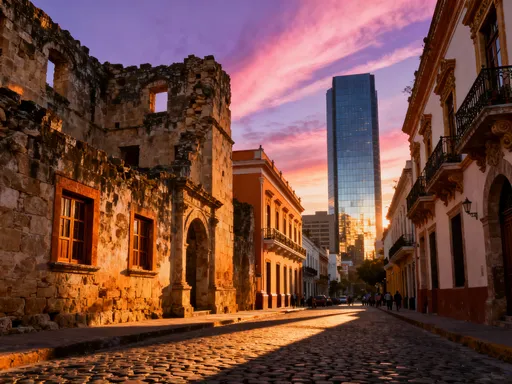
You know that feeling when a city’s skyline tells a story before you even step inside? Mexico City does that—its buildings don’t just stand tall, they speak. From colonial facades to futuristic towers, every structure carries centuries of history, culture, and resilience. I wandered its streets, eyes tracing rooftops and courtyards, and realized: this city is a living museum of architectural evolution. What makes it truly mind-blowing is how old and new don’t clash—they converse. The past is not buried here; it’s embedded in the pavement, etched into stone, and reflected in glass. This is a city where every block tells a chapter of Mexico’s soul, written in brick, tile, and mortar.
The Layers Beneath the Streets
Mexico City rests upon a foundation far deeper than concrete or steel—it is built upon memory, water, and time. The metropolis sits on the remnants of Tenochtitlán, the grand island capital of the Aztec Empire, which thrived in the heart of Lake Texcoco until the 16th century. When the Spanish arrived and conquered the city, they did not erase it—they built over it, stone upon stone, layer upon layer. Today, remnants of this ancient civilization emerge in unexpected ways: basalt foundations uncovered during subway construction, temple platforms beneath modern plazas, and the very ground that shifts beneath the city’s weight.
This geological reality shapes the city’s architecture in profound ways. Much of central Mexico City is constructed on soft, compressible lakebed sediments, leading to uneven subsidence—a phenomenon visible in landmarks like the Metropolitan Cathedral, whose foundation has required continuous reinforcement for centuries. Engineers and architects must design with this instability in mind, integrating flexible foundations, deep pilings, and advanced monitoring systems to preserve historic structures. It is not uncommon to see buildings leaning slightly or requiring hydraulic jacks to maintain balance, a testament to both human ingenuity and nature’s persistence.
Yet, the influence of Tenochtitlán extends beyond soil conditions. The city’s original grid, aligned with cardinal directions and intersected by canals, still subtly guides modern urban planning. Avenues like Avenida Juárez and calzadas such as Calzada de Tlalpan trace the paths of ancient causeways. Even the layout of Alameda Central echoes the ceremonial spaces of the past. Walking through the Centro Histórico, one senses an invisible blueprint—one that connects present-day life to a civilization that once ruled an empire from an island in a vast lake. This continuity is not accidental; it is a dialogue between epochs, where every excavation reveals not just ruins, but roots.
Understanding this deep past transforms how visitors experience the city. It is no longer enough to admire a façade—you begin to look beneath it. You notice how modern infrastructure negotiates ancient terrain, how preservation efforts honor both cultural and geological heritage, and how Mexico City’s identity is not just shaped by what stands above ground, but by what lies beneath. This awareness fosters a deeper respect for the resilience required to sustain a megacity on such unstable ground—a resilience mirrored in its people, its politics, and its enduring spirit.
Colonial Grandeur That Still Commands Attention
Following the fall of Tenochtitlán, the Spanish colonial project sought not only political control but cultural dominance, and architecture became one of its most powerful tools. The conquistadors dismantled temples and repurposed their stones to construct churches, palaces, and administrative buildings in the European style. Over the next three centuries, Mexico City evolved into a showcase of Iberian grandeur, with Baroque and Renaissance influences shaping its skyline. These structures were more than places of worship or governance—they were declarations of faith, power, and permanence.
The Metropolitan Cathedral, begun in the 16th century and completed over 250 years later, stands as the most iconic symbol of this era. Spanning the entire north side of the Zócalo, it is the largest cathedral in the Americas and a masterpiece of architectural fusion. Its façades blend Renaissance symmetry, Baroque ornamentation, and Neoclassical elements added in later centuries. Intricate carvings depict saints and biblical scenes, while twin bell towers rise like sentinels over the city. Inside, gilded altarpieces, vaulted ceilings, and stained-glass windows create an atmosphere of solemn majesty. Yet, the cathedral’s very structure tells another story—one of adaptation. Built on unstable ground, it has undergone countless restorations, with engineers developing innovative techniques to stabilize its foundations without compromising its historic integrity.
Equally significant is the Palacio de los Marqueses de Jaral de Berrio, a 17th-century mansion located near the cathedral. With its ornate stonework, central courtyard, and arched corridors, it exemplifies the domestic architecture of the colonial elite. Such residences were designed to reflect status and piety, often incorporating religious iconography into their design. Over time, many of these buildings have been repurposed—some now house museums, cultural centers, or government offices—demonstrating the city’s ability to adapt historical spaces for contemporary use.
What makes colonial architecture in Mexico City so compelling is not just its aesthetic beauty, but its transformation over time. While originally intended to impose a foreign aesthetic, these buildings gradually absorbed local influences. Indigenous artisans contributed their craftsmanship, blending European forms with Mesoamerican motifs in woodwork, tile, and sculpture. This synthesis gave rise to a uniquely Mexican interpretation of colonial design—one that speaks not of pure conquest, but of cultural negotiation. Today, these structures are no longer symbols of domination, but of endurance. They belong not to the past, but to the living city, where mass is still held in centuries-old chapels and families gather in courtyards that have echoed with laughter for generations.
Neoclassical Dreams and Republican Ambitions
With Mexico’s independence from Spain in 1821, a new era of national self-definition began, and architecture played a crucial role in shaping the young republic’s identity. No longer tied to colonial religious authority, the nation looked to classical antiquity for inspiration—drawing from Greco-Roman ideals of democracy, reason, and civic virtue. The Neoclassical style, with its emphasis on symmetry, proportion, and monumental scale, became the preferred language of a country eager to assert its maturity and sophistication on the world stage.
One of the most prominent examples of this shift is the Palacio de Bellas Artes, though its final form incorporates multiple styles. Originally conceived in the early 20th century, its exterior reflects Art Nouveau and Art Deco influences, but its interior and structural philosophy are deeply rooted in Neoclassical ideals. The grand hall, with its marble columns, coffered ceiling, and natural skylight, evokes the grandeur of ancient Roman baths and Renaissance theaters. As the nation’s premier venue for opera, dance, and visual arts, the palace was designed not merely as a performance space, but as a temple of culture—a place where art and intellect would elevate the public spirit.
Other civic buildings from this period echo similar ambitions. The Palacio de Correos, or Postal Palace, completed in 1907, combines Italian Renaissance and Beaux-Arts influences with intricate detailing in bronze, marble, and stained glass. Its grand staircase and clock tower convey a sense of permanence and order, reflecting the government’s desire to project stability and modernity. Similarly, the Suprema Corte de Justicia, Mexico’s Supreme Court building, employs clean lines, Doric columns, and a restrained façade to communicate impartiality and authority.
This architectural shift marked a broader transformation in societal values. While the colonial era centered on religious institutions, the 19th and early 20th centuries prioritized civic life—education, justice, the arts, and public discourse. Schools, libraries, and theaters were constructed with the same care as churches, signaling that culture and knowledge were now central to national identity. The style’s clarity and balance offered a visual counterpoint to the ornate complexity of Baroque design, symbolizing a move toward rationality and progress.
Today, Neoclassical buildings continue to serve as anchors of public life. They house institutions that shape the nation’s future, from courts to cultural centers, and their enduring presence reminds citizens of the ideals upon which the republic was founded. More than aesthetic choices, these structures represent a vision of Mexico as a modern, enlightened society—one where beauty and function coexist in service of the common good.
The Explosion of Modernism in the 20th Century
The Mexican Revolution (1910–1920) shattered old hierarchies and opened the door to radical social change, and architecture became a vehicle for reimagining the nation. In the decades that followed, modernism emerged not as a mere stylistic trend, but as a philosophy of progress, equality, and innovation. Architects embraced new materials—steel, glass, reinforced concrete—and rejected historical imitation in favor of functional, forward-looking design. This was architecture with a mission: to improve lives, express national identity, and integrate art into everyday spaces.
Luis Barragán, one of Mexico’s most celebrated architects, redefined modernism with a deeply poetic approach. His works, such as the Casa Luis Barragán—a UNESCO World Heritage site—combine minimalist forms with vibrant color, natural light, and serene courtyards. Walls painted in bold hues of pink, yellow, and terracotta create emotional resonance, while water features and native vegetation blur the boundary between interior and exterior. Barragán’s architecture is not cold or industrial; it is contemplative, spiritual, and deeply rooted in Mexican landscape and tradition. His influence extends far beyond private homes—he shaped public plazas, gardens, and urban developments that prioritize human experience over spectacle.
At the other end of the spectrum, architects like Juan O’Gorman and Mario Pani focused on social housing and large-scale urban planning. O’Gorman’s design for the Central Library at the National Autonomous University of Mexico (UNAM) features a monumental mosaic mural by artist Juan O’Gorman himself, covering the entire façade with a symbolic map of Mexico. This integration of art and architecture became a hallmark of Mexican modernism, reflecting the post-revolutionary ideal of making culture accessible to all. Pani, meanwhile, pioneered high-density housing projects like the Multifamiliar Alemán and Nonoalco-Tlatelolco complex, aiming to provide dignified, affordable living spaces for the growing urban population. Though some of these projects later faced challenges related to maintenance and social dynamics, they represented a bold attempt to use architecture as a tool for social equity.
UNAM itself stands as one of the greatest achievements of 20th-century Mexican architecture. Declared a UNESCO World Heritage site in 2007, the campus is a masterful synthesis of modernist design, indigenous symbolism, and environmental integration. Buildings feature murals by Diego Rivera, David Alfaro Siqueiros, and other muralists, turning academic spaces into open-air galleries. Landscaping incorporates native plants and open plazas, encouraging movement and community. The university is not just a place of learning—it is a physical manifestation of Mexico’s cultural renaissance.
This era of modernism was not about rejecting the past, but reinterpreting it. Architects drew from pre-Hispanic forms, local materials, and regional climate conditions to create a uniquely Mexican modernism—one that balanced international trends with national character. The legacy of this period endures in the way public spaces are designed to foster connection, how color is embraced as emotional expression, and how art remains inseparable from architecture.
Contemporary Visions: When Glass Meets History
In the 21st century, Mexico City continues to evolve, its skyline punctuated by sleek glass towers and innovative urban interventions. Yet, unlike cities where modernization erases the past, Mexico City engages in a continuous dialogue between old and new. Contemporary architecture here does not seek to dominate but to respond—to the city’s seismic risks, environmental challenges, and rich historical context. The result is a built environment that is both forward-thinking and deeply respectful of heritage.
Torre Reforma, completed in 2016, exemplifies this balance. Standing at 246 meters, it is one of the tallest buildings in Mexico and a marvel of earthquake-resistant engineering. Designed by architect Benjamin Romano, the tower features a unique triangular core and flexible structural system that allows it to sway safely during seismic activity. Its façade, made of high-performance glass, reduces solar heat gain and improves energy efficiency. Notably, the building was constructed adjacent to a 1950s-era structure, which was preserved and integrated into the new development—a symbolic gesture of continuity.
Elsewhere, adaptive reuse has become a hallmark of sustainable urbanism. Old factories, warehouses, and mansions are being transformed into cultural hubs, boutique hotels, and co-working spaces. The Roma and Condesa neighborhoods, once residential enclaves for the elite, now buzz with creativity as historic homes house independent bookstores, artisan cafes, and design studios. These conversions honor the craftsmanship of the past while meeting the needs of a dynamic, modern economy. Rather than demolishing what exists, architects are finding ways to breathe new life into it—preserving tile work, wooden beams, and stained glass while updating interiors for contemporary use.
Environmental concerns also drive innovation. With air quality and water scarcity remaining critical issues, new developments increasingly incorporate green roofs, rainwater harvesting, and passive cooling strategies. Buildings like the Torre BBVA, with its aerodynamic shape and energy-efficient systems, demonstrate how sustainability can coexist with elegance. At the same time, urban planners are rethinking public space, expanding pedestrian zones, bike lanes, and green corridors to improve quality of life.
This era of architectural evolution is defined by responsibility as much as ambition. Architects are not just designing buildings—they are shaping the future of a megacity home to over 21 million people. Their work must contend with density, pollution, and seismic vulnerability, yet they respond with creativity, resilience, and vision. In doing so, they uphold a tradition that sees architecture not as static art, but as a living force for progress.
Hidden Gems Beyond the Tourist Path
While the Zócalo and Chapultepec Castle draw millions of visitors each year, some of Mexico City’s most compelling architectural stories unfold in its neighborhoods, where history feels personal and discovery is around every corner. Roma, Condesa, and Coyoacán offer a more intimate scale, where early 20th-century mansions, art deco apartments, and converted industrial spaces create a tapestry of styles and stories. These areas were once on the city’s outskirts, developed as garden suburbs for the middle and upper classes, and their layouts still reflect a slower, more human-centered way of life.
In Roma Norte and Sur, tree-lined avenues are lined with French-inspired townhouses featuring wrought-iron balconies, stained-glass windows, and tiled roofs. Many were built in the 1920s and 1930s, blending European elegance with Mexican craftsmanship. Over the decades, these homes have served as family residences, embassies, and now, increasingly, as cultural venues. A single block might house a microbrewery in a former garage, a contemporary art gallery in a restored salon, and a vegetarian restaurant in a sunlit courtyard. This layered use of space reflects the city’s adaptability and the value placed on preserving character over uniformity.
Condesa, with its octagonal plaza and curving streets, was designed as a modernist experiment in urban living. The apartment buildings here feature streamlined forms, geometric details, and rooftop terraces—hallmarks of 1930s Art Deco and Streamline Moderne styles. Iron railings, mosaic floors, and built-in cabinetry speak to a time when design was both functional and beautiful. Today, these buildings remain desirable places to live, their charm enhanced by the neighborhood’s vibrant street life, cafés, and bookshops.
Coyoacán, once a separate village and home to figures like Frida Kahlo and Leon Trotsky, retains a village-like atmosphere. Cobblestone streets wind past colonial-era churches, 19th-century haciendas, and the iconic Casa Azul, Kahlo’s cobalt-blue home turned museum. Here, architecture tells stories of art, revolution, and personal resilience. Walking through the neighborhood feels like stepping into a different era—one where time moves more slowly and every façade holds a secret.
These neighborhoods remind us that architecture is not just about monuments, but about daily life. They are places where families grow, artists create, and communities gather. Exploring them offers a more nuanced understanding of Mexico City—not as a collection of landmarks, but as a living, breathing organism shaped by countless individual stories.
Why Architecture Is Mexico City’s True Identity
Mexico City’s soul is not found in a single museum, market, or monument—it is written into the very fabric of its streets. Its architecture is not a backdrop, but a protagonist in the story of the nation. From the sunken temples beneath the Zócalo to the glass towers of Reforma, the city’s buildings are active participants in daily life. A colonial home becomes a bookstore. A 19th-century palace houses a modern art exhibit. A revolutionary-era housing complex shelters generations of families. This constant reuse, reinterpretation, and renewal is what makes the city so alive.
What sets Mexico City apart is not merely the coexistence of old and new, but their conversation. There is no forced separation between eras; instead, they overlap, intertwine, and inform one another. A Baroque church stands beside a Brutalist government building. A pre-Hispanic pyramid shares a skyline with a solar-powered office tower. This architectural layering reflects the complexity of Mexican identity—multilayered, resilient, and constantly evolving.
Preserving this heritage is not about freezing the city in time, but about nurturing its ability to grow while remembering where it came from. Conservation efforts focus not only on protecting individual buildings, but on maintaining the character of entire neighborhoods, supporting local businesses, and involving communities in urban planning. Initiatives like the Historic Center Revitalization Program have restored facades, improved lighting, and expanded pedestrian access, making historic areas safer and more vibrant.
For visitors, this means an experience unlike any other. To walk through Mexico City is to witness time in motion. Every step reveals a new layer—of history, of culture, of human ingenuity. It is a city that invites not just sightseeing, but reflection. It asks us to consider how places shape identity, how memory is preserved in stone and steel, and how beauty can emerge from resilience.
In the end, Mexico City’s architecture is more than a collection of styles. It is a testament to survival, creativity, and the enduring power of place. It reminds us that cities are not just built—they are lived in, loved, and continually reimagined. And in that ongoing dialogue between past and future, Mexico City finds its truest voice.